
Trade & industry · 27 August 2026
World prices arrive at the dock before they arrive in the CPI
Export-price inflation abroad is the next imported impulse. Industrial strategy will not outrun the grid or the cost of capital.
27 August 2026 · Hamilton desk
Britain remains a trading economy that is not entirely sure what it wants to sell. Goods trade is still adjusting to a harder border with the European Union. Services, especially the professional and financial kind clustered in London, have been more resilient. The current account is a slow leak rather than a crisis. That combination produces a politics of industrial strategy without a matching set of firms ready to absorb the subsidies.
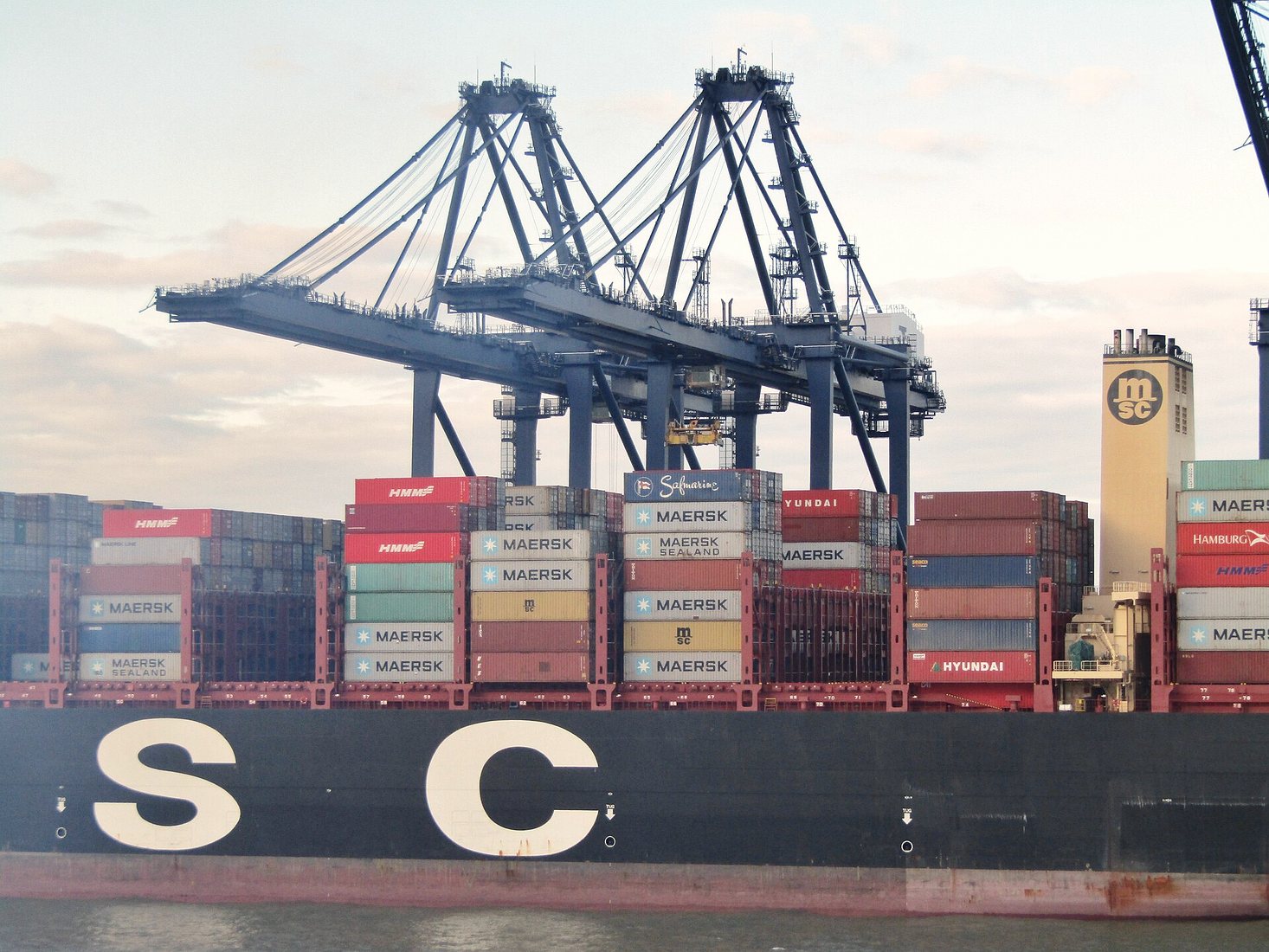
Ports are the physical reminder. Felixstowe, London Gateway and the smaller east-coast terminals are where world export prices become British import prices. The Bank has already flagged that UK-weighted world export price inflation, excluding oil, was expected to rise sharply in the second and third quarters of 2026. Some of that is energy. Some of it is the general price of stuff in a world that is re-arming, re-shoring, and pouring capital into data centres.
Energy is trade policy whether ministers say so or not. A country that still burns a lot of gas, that has run down storage debates for a decade, and that also has some of Europe’s best offshore wind, lives on both sides of the shock. Clyde and the North Sea are not opposites. They are the same security problem in different decades.
Manufacturing’s share of output is small and its political weight is large. That is not foolish. Manufacturing is where tradable productivity gains still sometimes appear, and where regional jobs that are not public-sector jobs still cluster. A strategy that only talks about “green industry” without talking about grid connections, planning, and the cost of capital is a brochure.
Sterling has been relatively well behaved against a trade-weighted basket, with a depreciation against the euro offset in part by an appreciation against the dollar. That has spared us an imported-inflation drama of 2022’s intensity. It has not given exporters a windfall. Exchange-rate luck is not a policy.
The adult version of industrial strategy is narrow. Pick a few things the state can actually do — energy, skills, ports, the science base — and stop announcing the rest. Trade policy that pretends Britain can be Switzerland, Singapore and the Rhineland at once will keep producing disappointed white papers.